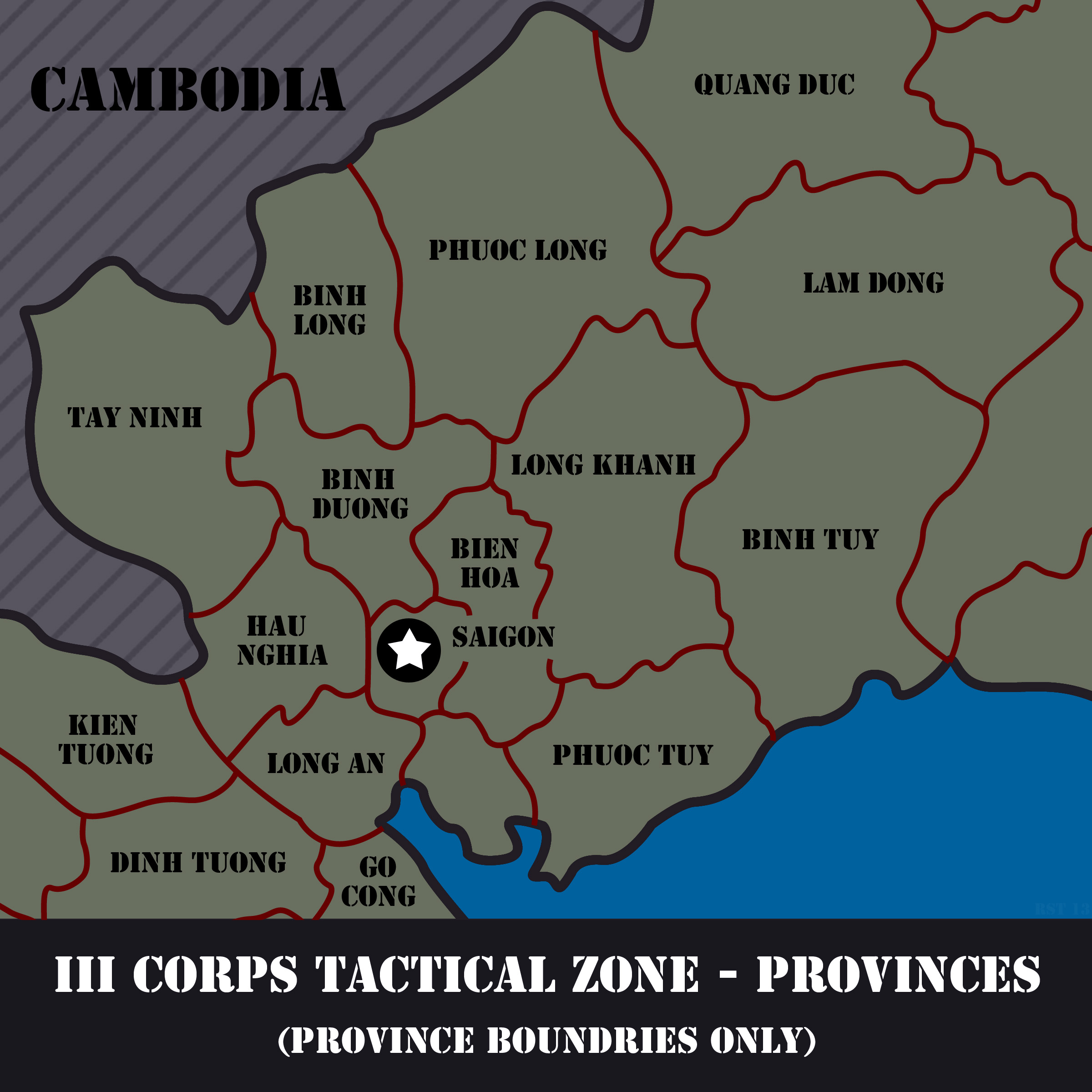
Tet 1968 - "Operation Saratoga" - Gia Dinh and Hau Nghia Provinces
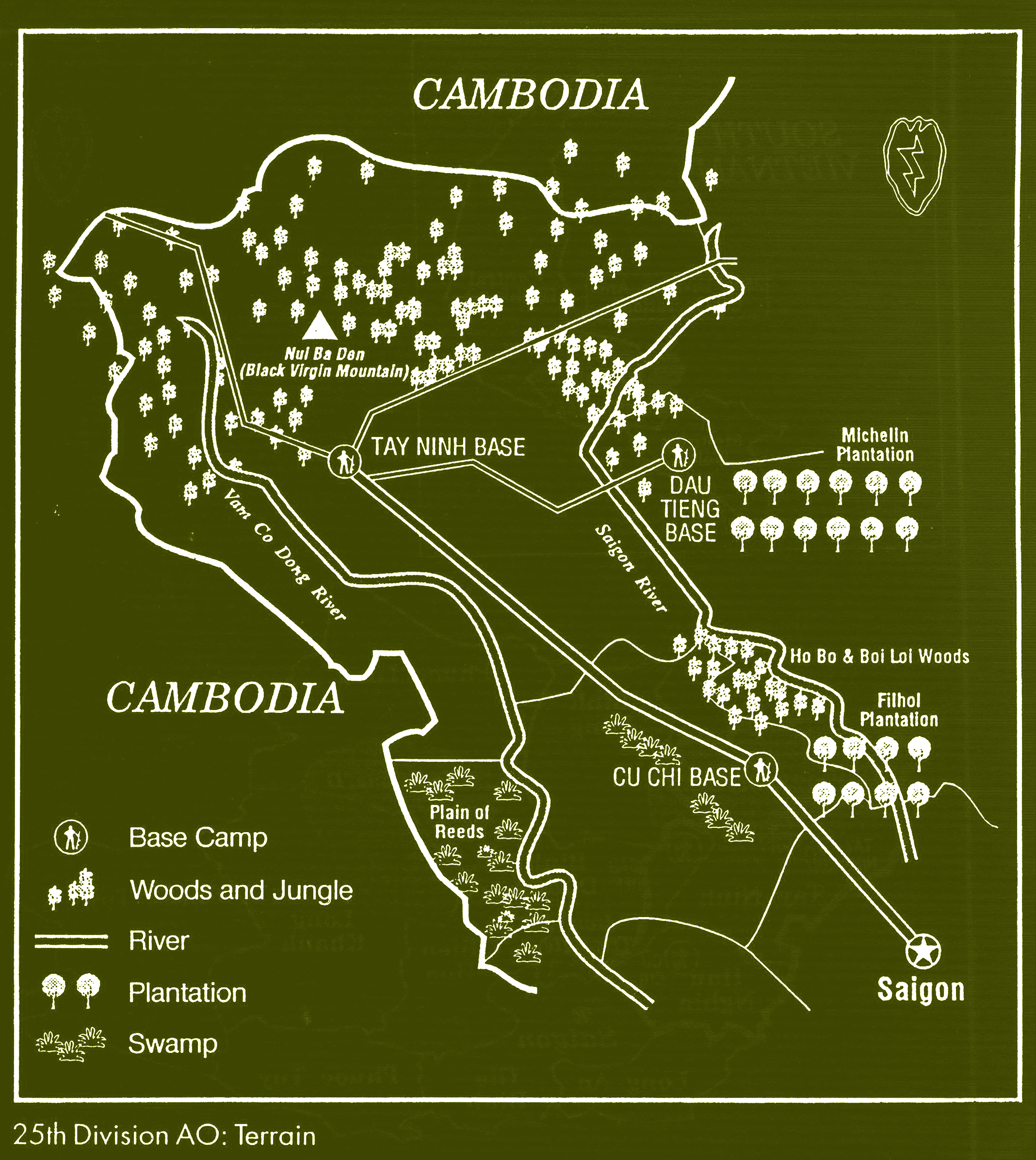
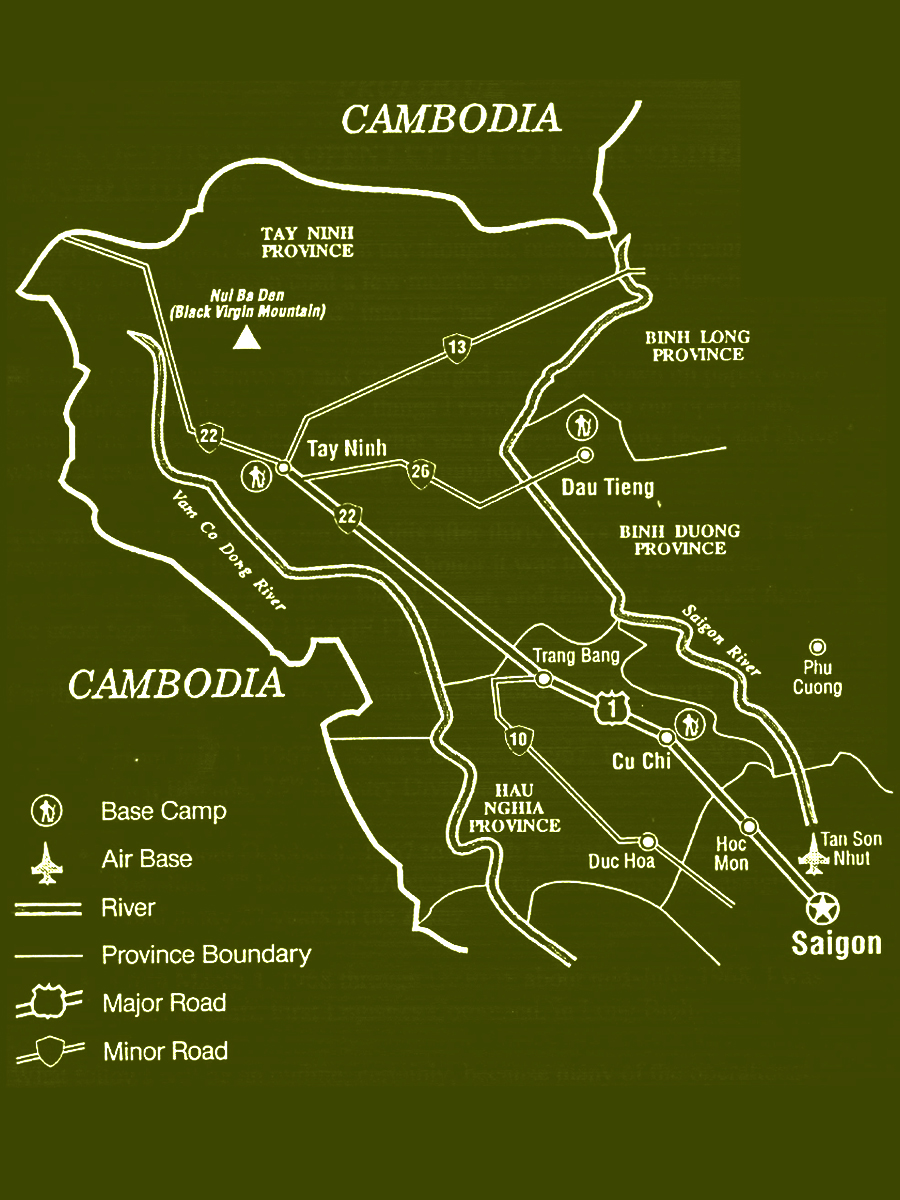
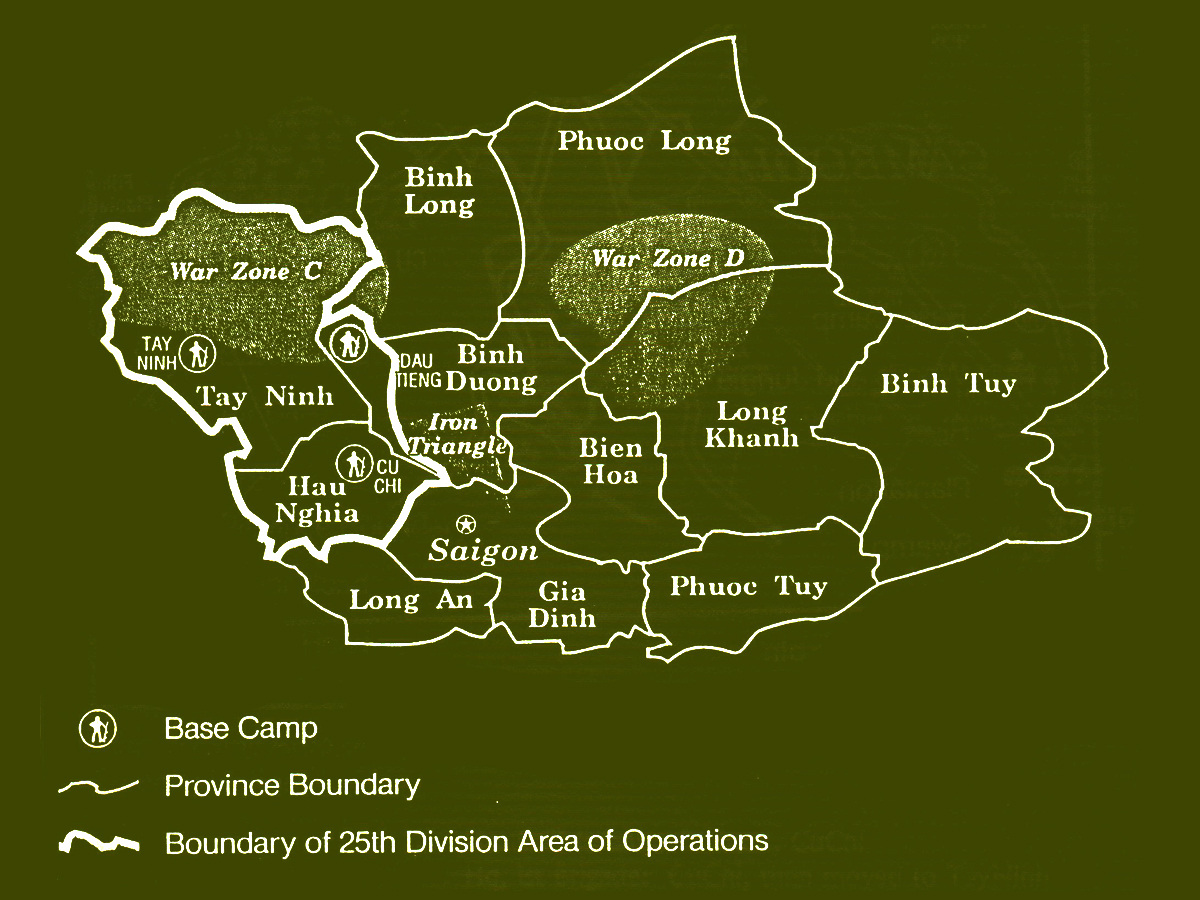
Co. A/1st Platoon Leader Lieutenant Richard Tipton writes:
"Alpha stayed at Katum as a security force when the rest of the Battallion went back to Tay Ninh. As the Katum base was being demolished, a Special Forces base was being built in its place. The SF camp had mounded dirt around an outer perimeter and another mound to create an inner perimeter. The SF team had at least 100 Cambodians with them. The SF XO, a lieutenant and I became friends as our combined units secured the engineers building the camp. I asked him how he knew which of the Cambods were on our side and which were on the other side. He said they knew they had some VC infiltrators. In case of a serious fight, the Americans could move back into the inner perimeter and hold their own he thought. One day while we were sitting on top of the mound talking, the VC/NVA mortared us with CS (tear gas) and followed them up with explosive rounds. No one was hit, but we moved off the mound quickly. The SF Lt. went out with us on a daytime patrol to get a feel for the area. We hit light contact and maneuvered to try to catch the attackers. After we returned to Katum the SF Lt. said he thought he’d pass on going out with us again. Their method of fighting was different from ours he said. When they made contact, they disengaged, we attacked. I don’t remember stopping at Tay Ninh or Cu Chi, so we may have gone directly from Katum to Hoc Mon."
Battalion Commander Lieutenant Colonel John Henchman remembered:
"As we closed out Katum (On February 23rd), the battalion was exhausted. Our equipment needed extensive repair, people needed to get clean, to rest. Our clothes were literally rags on our backs. Boots were rotting off our feet. We were tired but proud on the inside, but looked like shit on the outside. We needed replacements for Bravo and Delta that were both very low in strength. We needed a few new officers to replace those who had been killed or medevaced. Col. Hobson, the Brigade C.O. had promised me a week stand down at Least. The Next day back Col. Hobson called me over to the C.P. General Mearns had ordered us, as the only available battalion in the Division, to move the out the next day into Hau Nghia Province. Typical of you all, you bitched, cried, swore, got mad as hell at the "god damn stupid uncaring Brass" but true to your tradition, you pulled on your tattered socks, filled your beat up rucks, cleaned your weapons and got saddled up. God Damn, I was Proud of you.
Distinguished Service Cross - KIA during actions February 27, 1968. In the vicinity of Hoc Mon
Citation: The President of the United States of America, authorized by Act of Congress, July 9, 1918 (amended by act of July 25, 1963), takes pride in presenting a Bronze Oak Leaf Cluster in lieu of a Second Award of the Distinguished Service Cross (Posthumously) to Major (Infantry) William Wakefield Roush (ASN: 0-74477), United States Army, for extraordinary heroism in connection with military operations involving conflict with an armed hostile force in the Republic of Vietnam, while serving with Headquarters and Headquarters Company, 4th Battalion, 9th Infantry, 1st Brigade, 25th Infantry Division. Major Roush distinguished himself by exceptionally valorous actions on 27 February 1968 as operations officer of an infantry battalion operating near Saigon. While moving along a narrow path between two canals, one platoon of his force was subjected to intense enemy small arms fire from the front and both flanks and several casualties were sustained. Major Roush directed two companies into the area to assist the beleaguered platoon, but they were immediately engaged in separate fire fights. Moving into the enemy fire, he noticed one company commander asking for volunteers to move ahead and provide covering fire for the trapped platoon. Directing the officer to stay in his location and maintain radio contact with the other elements, Major Roush led the volunteers down one of the canals toward the platoon's position. Unsuccessful in this attempt to join with the trapped element, he returned to the company command post and, with three other volunteers, began crawling into the path of the enemy fire. While trying to reach the platoon's casualties, his group was detected, and the enemy opened up with brutal small arms fire, mortally wounding Major Roush. His actions, however, had diverted the insurgents' attention to his own position, allowing the battered platoon to escape the deadly cross fire and find safety. Major Roush's extraordinary heroism and devotion to duty, at the cost of his life, were in keeping with the highest traditions of the military service and reflect great credit upon himself, his unit, and the United States Army.
Stories and Comments